How to Choose a Product Feedback Tool
A guide to selecting the right platform for collecting, organizing, and prioritizing user feedback. Covers feedback capture methods, prioritization frameworks, roadmap publishing, and how to close the loop with users.
Key Decision Criteria
Feedback Collection Method
High PriorityCanny provides a public feedback board where users submit and upvote ideas — transparent and community-driven. ProductBoard captures feedback from multiple sources (email, Slack, Intercom, sales calls) and ties it to user segments. UserVoice combines feedback forums with in-app widgets and NPS surveys. Choose based on whether you want user-driven or team-curated feedback.
Prioritization Framework
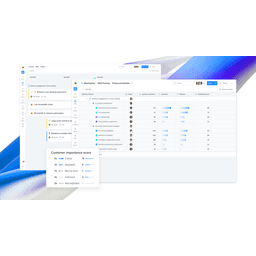
High PriorityCanny ranks by votes, which is simple but biased toward vocal users. ProductBoard offers weighted scoring with custom impact and effort fields tied to objectives — the most sophisticated prioritization. UserVoice uses SmartVote algorithms to surface signal beyond raw vote counts. The right framework depends on whether you're product-led (votes work) or sales-led (segmented impact matters).
Roadmap and Changelog Publishing
Medium PriorityAll three tools let you publish a public roadmap showing what's planned, in progress, and shipped. Canny includes a built-in changelog that notifies voters when their requested feature ships. ProductBoard's portal is the most customizable. The close-the-loop feature drives retention — users who see their feedback acted on become loyal advocates.
Questions to Ask Yourself
How many feedback sources do you need to consolidate?
Single source (public board): Canny Free handles up to 100 tracked users and is the simplest to set up. Multiple sources (email, Slack, Intercom, sales calls): ProductBoard Essentials ($20/maker/mo) aggregates feedback from everywhere and tags it to user segments. If feedback is scattered across 5+ channels, the consolidation alone is worth the price.
Do you sell to consumers or enterprises?
Consumer/PLG: Canny's public voting board creates community engagement and lets users see they're heard. Enterprise/sales-led: ProductBoard lets you weight feedback by account revenue and segment, so a $100k/year customer's request gets appropriate visibility versus a free user's. UserVoice fits mid-market companies with both self-serve and sales-assisted motions.
How mature is your product management process?
Early stage: Canny Free gives you a feedback board in minutes. Don't over-invest in tooling before you have consistent feedback volume. Growth stage: ProductBoard's prioritization matrix and objective linking help when you have too many requests to manage by gut. Scale: UserVoice or ProductBoard Enterprise add workflows, SLA tracking, and advanced analytics.
Red Flags to Watch For
Letting vote counts drive your entire roadmap
Public upvotes are biased toward power users and vocal minorities. A feature with 200 votes from free users may matter less than a request from 3 enterprise accounts worth $500k in ARR. Use votes as signal, not as a decision-making algorithm.
Collecting feedback without ever closing the loop
The fastest way to kill a feedback channel is to never respond. When users submit ideas and hear nothing for months, they stop contributing. Set up automated status updates — Canny and ProductBoard both notify voters when a feature moves to planned, in progress, or shipped. This costs zero effort and builds enormous goodwill.