How to Choose Go-to-Market Tools for Your Startup
A guide to assembling the right go-to-market stack for outbound and inbound growth. Covers prospecting, email sequencing, CRM integration, and how to avoid overspending before you've found product-market fit.
Key Decision Criteria
GTM Motion Type
High PriorityProduct-led growth needs analytics and self-serve onboarding tools. Sales-led growth needs prospecting databases, email sequencing, and CRM workflows. Most startups blend both — identify your primary motion first and build from there.
Data Quality and Enrichment
High PriorityYour outbound results are only as good as your contact data. Apollo offers 275M+ contacts with email verification built in. Instantly focuses on sending infrastructure rather than data. Evaluate whether you need a data provider, a sending tool, or both.
Sending Volume and Deliverability
High PriorityCold email deliverability has gotten harder with Google and Microsoft cracking down. Tools like Instantly specialize in email warmup and rotation across multiple sending accounts. If you're sending 500+ cold emails per week, deliverability infrastructure matters more than features.
Budget at Current Stage
Medium PriorityPre-revenue startups can start with Apollo's free tier (600 email credits/month) and HubSpot's free CRM. At $100-300/month, you unlock serious sequencing with Lemlist or Instantly. Enterprise-grade tools like full HubSpot Sales Hub start at $500+/month.
Questions to Ask Yourself
Is your primary growth channel inbound, outbound, or product-led?
Inbound-first: HubSpot's marketing hub with forms, landing pages, and lead scoring is the natural starting point. Outbound-first: Apollo for prospecting + Lemlist or Instantly for sequencing gives you a full outbound stack under $200/month. Product-led: Focus spend on analytics and activation tools instead — GTM tools come later when you add a sales layer.
How many prospects are you contacting per week?
Under 50/week: Manual outreach from Apollo or LinkedIn is fine — don't over-automate yet. 50-500/week: You need sequencing (Lemlist at $59/mo or Instantly at $30/mo) to stay consistent. 500+/week: Deliverability becomes your bottleneck. Instantly's multi-account rotation and warmup tools are specifically designed for this volume.
Do you have a dedicated sales team or is the founder doing sales?
Founder-led sales: Keep it simple. Apollo's built-in sequences + HubSpot free CRM covers most needs. You don't need Outreach or SalesLoft yet. Dedicated SDR team: Invest in proper sequencing tools with team analytics, A/B testing, and shared templates. Lemlist or Apollo's paid plans provide team collaboration features worth paying for.
Red Flags to Watch For
Buying expensive GTM tools before having a defined ideal customer profile
Apollo's database has 275M+ contacts, but that's useless if you can't filter to your exact ICP. Before spending on tools, nail down your target company size, industry, job titles, and qualifying criteria. A focused list of 200 perfect prospects outperforms 10,000 generic ones.
Running high-volume cold outbound without email warmup
Sending 500+ cold emails from a new domain without proper warmup will tank your deliverability within days. Google and Microsoft now aggressively filter cold senders. Tools like Instantly include warmup, but you still need 2-4 weeks of warming before scaling volume.
Stacking multiple tools with overlapping features
Apollo does prospecting, sequencing, and basic CRM. If you add Lemlist for sequencing and HubSpot for CRM, make sure data flows cleanly between them — otherwise you'll spend more time syncing tools than selling. Map your workflow before adding another subscription.
Our Top Picks

HubSpot
Free CRM with powerful marketing, sales, and service tools.

Apollo.io
Sales intelligence and engagement platform.

Lemlist
Personalized cold emails that get replies.

Instantly.ai
Scale your cold email outreach.
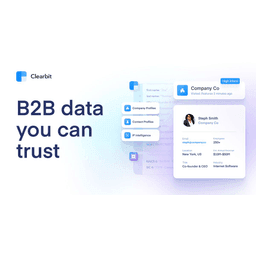
Clearbit
B2B data for go-to-market.

ZoomInfo
B2B contact and company intelligence.

LinkedIn Sales Navigator
Advanced lead and company search for B2B sales.

Lusha
B2B contact and company data platform.

Hunter.io
Find and verify professional email addresses.

Ahrefs
All-in-one SEO toolset.

beehiiv
The newsletter platform built for growth.

Clearscope
SEO content optimization platform.

Ghost
Turn your audience into a business.

Moz
SEO software and data.

Screaming Frog
SEO Spider Tool.

Semrush
Online marketing made easy.

Substack
Start a newsletter. Build your audience.

WordPress
The world's most popular website builder.